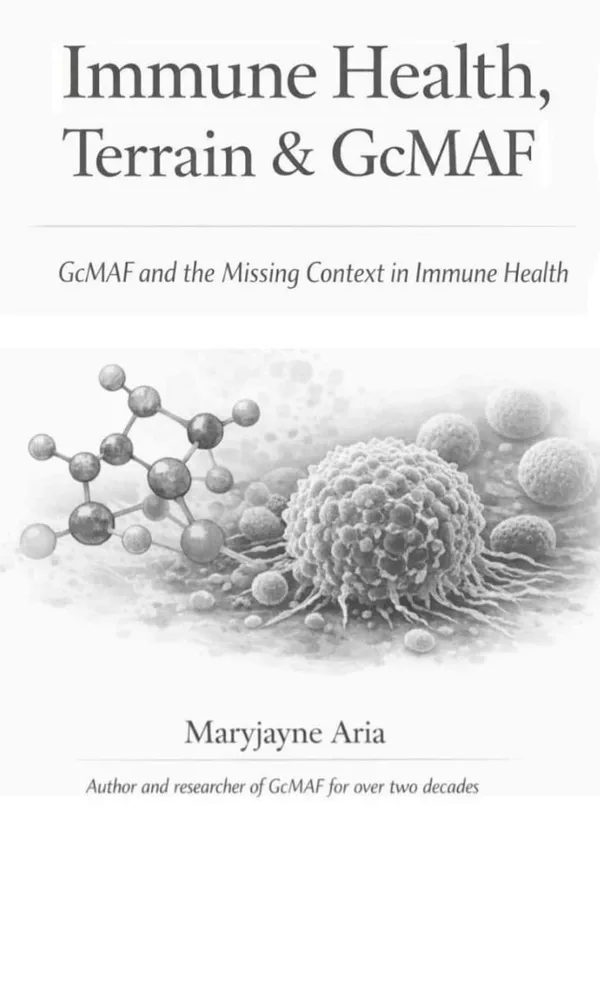
-
Book
The GcMAF Book

web.archive.orgBuy
Description
Overview and Purpose
The GcMAF Book presents a comprehensive exploration of two naturally occurring proteins—GcMAF (glycoprotein macrophage activating factor) and Nagalase (alpha-N-acetylgalactosaminidase)—and their critical roles in cancer and viral disease detection and treatment. The book aims to promote awareness of Nagalase as a sensitive biomarker for early cancer and viral infections, and to advocate for the therapeutic use of GcMAF injections to activate macrophages, the immune system’s primary cancer- and virus-killing cells. It highlights the groundbreaking research of Dr. Nobuto Yamamoto, who demonstrated remarkable clinical outcomes using GcMAF, including purported cures for early metastatic cancers and HIV.
The intended audience includes medical professionals interested in immunotherapy and molecular diagnostics, researchers in oncology and infectious diseases, patients seeking alternative or adjunctive cancer therapies, and advocates for early detection and immune-based treatments. The book also addresses challenges in acceptance and availability of GcMAF therapy, emphasizing the need for public education and institutional change.
Preface and Introduction: The Promise of GcMAF and Nagalase Testing
The book opens by introducing GcMAF and Nagalase as two pivotal proteins in the body’s immune defense and disease processes. Nagalase is produced by cancer cells and viruses, serving as an early warning biomarker detectable before tumors are visible on imaging. Elevated Nagalase levels indicate the presence of cancer or viral infection, while GcMAF activates macrophages to attack these threats.
Routine Nagalase testing is proposed as a screening tool analogous to cholesterol testing for cardiovascular risk, enabling early detection and intervention. GcMAF injections can bypass the immune suppression caused by Nagalase, reactivating macrophages to eradicate cancer cells and viruses. The introduction includes a compelling clinical example of metastatic breast cancer remission monitored by Nagalase levels and treated with GcMAF.
Chapter 1: A Cure for Metastatic Cancer?
Dr. Nobuto Yamamoto’s research is central to the book’s thesis. His studies report a 100% cure rate for early metastatic breast, prostate, and colon cancers, as well as HIV, using weekly 100 nanogram GcMAF injections over several months. The therapy is most effective when tumor burden is low, such as early-stage disease or after surgical debulking. Tumors larger than 1 cm respond less well.
The chapter discusses the scientific rigor behind Yamamoto’s work, published in peer-reviewed journals and supported by decades of molecular biology research. Despite this, GcMAF remains obscure due to the complexity of its molecular mechanisms, lack of patentability, and resistance from the medical and pharmaceutical industries. The author advocates for routine Nagalase screening and early GcMAF treatment to potentially eradicate cancer by harnessing the body’s natural immune defenses rather than relying solely on conventional “slash and burn” therapies.
Chapter 2: Professor Yamamoto and Real Science
This chapter distinguishes different types of research—black box outcome studies, population statistics, and basic science—and situates Yamamoto’s work firmly in the basic science category. His elucidation of how cancer-produced Nagalase disables macrophage activation and how GcMAF restores immune function is highlighted as a significant but underrecognized contribution. The chapter underscores the potential benefits of wider adoption of these findings.
Chapter 3: Your Incredible Immune Army
The immune system is portrayed as a vast and complex army comprising hundreds of billions of cells with sophisticated communication and weaponry. Macrophages are emphasized as large, aggressive immune cells capable of engulfing and destroying cancer cells and pathogens. The chapter explains the essential role of immune activation in survival and disease control.
Chapter 4: The War on Cancer Inside Us
Cancer is described as a molecular-scale war between cancer cells and immune cells, primarily macrophages. The outcome of this internal battle determines patient survival. Nagalase testing and GcMAF therapy are presented as promising tools to tip the balance in favor of the immune system. The chapter acknowledges significant resistance from the medical establishment and industry as a major obstacle to progress.
Chapter 5: Your Immune Cells Versus The Pathogen Army: A Nanoscale War
This chapter delves into the molecular mechanisms by which cancer cells evade immune destruction. Cancer cells produce Nagalase to block GcMAF production, effectively putting macrophages into an inactive “zombie” state. GcMAF injections bypass this blockade, reactivating macrophages to aggressively seek and destroy cancer cells and viruses. The chapter quantifies the increase in macrophage activity—up to 30-40 fold—upon GcMAF activation and describes weekly 100 ng injections as the typical therapeutic regimen.
Chapter 6: Your Awesome Macrophage Killing Machine
Macrophages are detailed as highly effective immune cells that engulf pathogens using pseudopods and opsonins (“super glue”). Their primary weapon is the oxidative burst, releasing reactive free radicals such as superoxide and hypochlorous acid to kill invaders. Superoxide dismutase (SOD) protects macrophages from self-inflicted damage during this process. Only GcMAF-activated macrophages deliver potent oxidative bursts; inactive macrophages have weak responses. The chapter also discusses intracellular killing within phagolysosomes and rapid molecular communication among immune cells.
Chapter 7: Macrophages Need GcMAF to Thrive
Macrophages are naturally indolent and require GcMAF for activation. GcMAF induces a dramatic increase in phagocytosis, oxidative burst, systemic macrophage count, and macrophage accumulation at inflammation sites. Weekly 100 ng injections can induce remission in metastatic breast, colon, and prostate cancers within months. Activated macrophages also present antigens, alerting other immune cells and reversing immunosuppression. Elevated Nagalase blocks GcMAF production, creating a vicious cycle of immune dormancy that allows cancer and viruses to proliferate.
Chapter 8: How Your Body Makes GcMAF
GcMAF is synthesized from Vitamin D Binding Protein (DBP), a glycoprotein with three sugars attached: alpha-N-acetylgalactosamine (GalNAc), D-galactose, and sialic acid. Two enzymes sequentially remove D-galactose and sialic acid, leaving DBP with only GalNAc attached, which is GcMAF. This biochemical pathway is critical for macrophage activation.
Chapter 9: Nagalase: Friend and Foe?
Nagalase is produced by all cancer cells and many viruses. It blocks GcMAF production by deglycosylating DBP, removing the sugars necessary to form GcMAF. This enzymatic activity causes immunodeficiency by preventing macrophage activation. Nagalase is a sensitive marker for early cancer and viral infection detection, and serial testing can track treatment effectiveness. Conventional medicine often ignores Nagalase testing due to its nonspecific nature, but early detection via Nagalase allows less invasive and more effective treatments. Restoring immune function by counteracting Nagalase is crucial for managing cancer and viral diseases.
Chapter 10: How Nagalase Blocks GcMAF Production
Nagalase enzymatically removes all three sugars from DBP, preventing its conversion into GcMAF and halting macrophage activation. As an enzyme, Nagalase repeatedly neutralizes many DBP molecules. No natural bodily process or drug effectively counters Nagalase. Dr. Yamamoto discovered this mechanism and demonstrated that GcMAF replacement therapy restores immune function despite Nagalase presence.
Chapter 11: If Cancer Cells Could Talk
This chapter reiterates that Nagalase production by cancer cells and viruses disables the GcMAF precursor, preventing macrophage activation and immune response. Cancer cells evade immune destruction by producing Nagalase. GcMAF therapy bypasses this blockade, reactivating macrophages to attack cancer cells. Nagalase levels correlate with disease presence and can monitor progression and treatment efficacy.
Chapter 12: GcMAF and HIV/AIDS
Dr. Yamamoto treated 15 non-anemic HIV patients with weekly 100 ng GcMAF injections for 18 weeks, resulting in eradication of HIV and sustained remission over seven years. HIV produces Nagalase to suppress immune response by blocking GcMAF production. GcMAF reactivates macrophages to phagocytize HIV, reducing viral load and Nagalase levels to normal. This study, published in 2009, showed a 100% cure rate but has not been widely discussed or followed up. Effectiveness in anemic HIV patients remains unknown.
Chapter 13: The AMAS Test - An Alternative to Nagalase Testing
The Anti-Malignin Antibody Serum (AMAS) test detects antibodies produced in response to cancer cells. AMAS is over 99% accurate when tested twice and is useful for early cancer detection and monitoring therapy effectiveness. Unlike Nagalase, AMAS does not detect viruses and is cancer-specific. AMAS levels rise with cancer presence and fall with successful treatment. It can detect cancers too small for imaging and reduce unnecessary biopsies by distinguishing malignant from benign masses. The chapter notes the potential for purified AMAS to be developed as a cancer treatment.
Chapter 14: Biomarker Testing
This chapter discusses the complementary roles of Nagalase, AMAS, and viral antibody testing. Nagalase indicates the presence of cancer and/or viral infection but cannot distinguish between them alone. AMAS is specific for cancer, and viral antibody tests identify specific viral infections. Combined testing allows differentiation between cancer and viral causes of elevated Nagalase. Annual Nagalase screening is recommended for people over 40 for early cancer detection. Elevated Nagalase or AMAS levels warrant presumptive treatment with GcMAF and other therapies even if cancer is occult (not visible on imaging). Monitoring these biomarkers tracks tumor burden and treatment response.
Chapter 15: Eradicating the Scourge of Cancer
Early detection of tumors smaller than 5 mm is critical for effective treatment and potential eradication of cancer. Weekly GcMAF injections can eliminate very small cancers by activating macrophages. The proposed strategy is annual Nagalase screening combined with GcMAF treatment for positives, which could potentially eradicate cancer.
Chapter 16: Retro-Docs and Nano-Medicine: A Rant
This chapter critiques conventional medical resistance to molecular diagnostics and early treatment of cancers not visible on imaging. It emphasizes that molecular medicine allows detection of disease at the biochemical level, enabling earlier and less invasive interventions. Other markers such as DHEA-S, MCV, and vitamin D are mentioned as indicators of disease risk and immune status. GcMAF dosing guidelines and monitoring recommendations are provided. The chapter acknowledges current challenges in finding experienced physicians for GcMAF and Nagalase testing.
Chapter 17: Differentiation and Cancer Grading
Cancer cells vary in differentiation: well-differentiated (low grade) resemble normal cells, while poorly differentiated (high grade) look abnormal and are more aggressive. Macrophages activated by GcMAF recognize and kill poorly differentiated cancer cells more effectively due to greater surface abnormalities. GcMAF therapy effectiveness correlates with the degree of cancer cell membrane abnormality. Studies show 100 ng GcMAF activates macrophages to kill various cancer types, with higher kill rates in undifferentiated tumors.
Chapter 18: The Cancer Continuum and the 'Point of No Return'
Cancer progression ranges from a single cell to widespread metastatic disease. Early detection and treatment improve prognosis; metastatic cancer is harder to cure. Dr. Yamamoto treated early metastatic patients with low tumor burden (post conventional therapy) using weekly 100 ng GcMAF injections, achieving cures. Larger tumors reduce GcMAF effectiveness; debulking via surgery, chemotherapy, or radiation improves outcomes. The "point of no return" is when tumor growth outpaces macrophage killing capacity; beyond this, GcMAF alone is insufficient. Monitoring with Nagalase and AMAS is essential to guide treatment timing and effectiveness.
Chapter 19: GcMAF Therapy Guidelines
- Dosage: 100 nanograms per week via single intramuscular injection; higher doses or more frequent dosing are counterproductive.
- Frequency: Weekly dosing aligns with macrophage activation half-life (~6 days).
- Route: Intramuscular injections required; oral administration degrades GcMAF.
- Duration: Varies by disease and patient; examples include 16-22 weeks for early metastatic breast cancer and up to 50 weeks for colorectal cancer.
- Side Effects: Pure, bioidentical GcMAF causes no adverse reactions; impure or contaminated products can cause side effects and be ineffective.
- Contraindications: Protease inhibitors and opiates may reduce effectiveness; anemia and low macrophage counts compromise response.
- Medical Monitoring: GcMAF should be administered under physician supervision alongside conventional therapies; tumor debulking improves outcomes.
Chapter 20: Why Not Skip Conventional Cancer Therapies and Just Take GcMAF?
GcMAF is more effective on smaller tumors; conventional therapies reduce tumor mass ("debulking"). Skipping conventional treatments risks cancer progression beyond reversible stages. Dr. Yamamoto’s studies involved patients who had undergone debulking but remained with metastatic disease. Early-stage cancers too small to image may be treated with GcMAF alone if detected by elevated Nagalase. Similar logic applies to HIV, where reducing viral load with drugs before GcMAF enhances outcomes. Physicians are encouraged to embrace molecular diagnostics and natural healing methods for early disease intervention.
Chapter 21: Knockoffs, Wannabes, Bootlegs, Counterfeits—and Certification
The emergence of GcMAF therapy has led to counterfeit and impure products. Pure GcMAF is bioidentical and non-toxic; symptoms during treatment indicate impurity or contamination. Types of knockoffs include impure or contaminated bootlegs and inactive phony substances. Packaging alone cannot verify authenticity; chemical and activity testing are required. Purity is critical as impurities cause side effects like fatigue and muscle pain. Potency is measured by macrophage activation assays, with only pure GcMAF achieving optimal activation. Certification programs are needed to ensure product purity and potency. Currently, no independently verified pure GcMAF products are widely available, so buyer beware.
Additional Notes on Research and Context
The book references numerous studies supporting immune-based cancer therapies, including monoclonal antibody trials and antiangiogenic strategies. It highlights extensive research by Samuel Bogoch, M.D., Ph.D., on Anti-Malignin Antibody (AMA/AMAS) as a cancer biomarker and potential therapeutic agent. The integration of immune biomarkers, molecular diagnostics, and macrophage activation therapies represents a paradigm shift from conventional cancer treatments toward immune modulation and early intervention.
Strengths and Utility
The book’s strengths lie in its detailed explanation of the molecular biology underlying GcMAF and Nagalase, its presentation of clinical data from Dr. Yamamoto’s research, and its advocacy for early detection and immune-based therapies. It provides practical guidelines for GcMAF therapy and biomarker monitoring, and addresses challenges in product purity and medical acceptance. The inclusion of complementary biomarkers like AMAS enhances the diagnostic framework.
Limitations and Cautions
The book acknowledges barriers to widespread adoption, including complexity of molecular biology, lack of patentability, and institutional resistance. It cautions about the prevalence of counterfeit GcMAF products and the need for medical supervision. While promising, some claims such as 100% cure rates require cautious interpretation and further independent validation. The therapy is presented as adjunctive rather than a replacement for conventional cancer treatments.
Conclusion
The GcMAF Book offers an in-depth resource on the role of macrophage activation factor and Nagalase in cancer and viral disease detection and treatment. It advocates for a shift toward molecular diagnostics and immune modulation, highlighting the potential of GcMAF therapy to revolutionize cancer care if challenges of recognition, availability, and purity can be overcome. This book is a valuable reference for those exploring immune-based cancer therapies and early detection strategies.