Sunlight, Mitochondria, and the Eight Pillars of Health
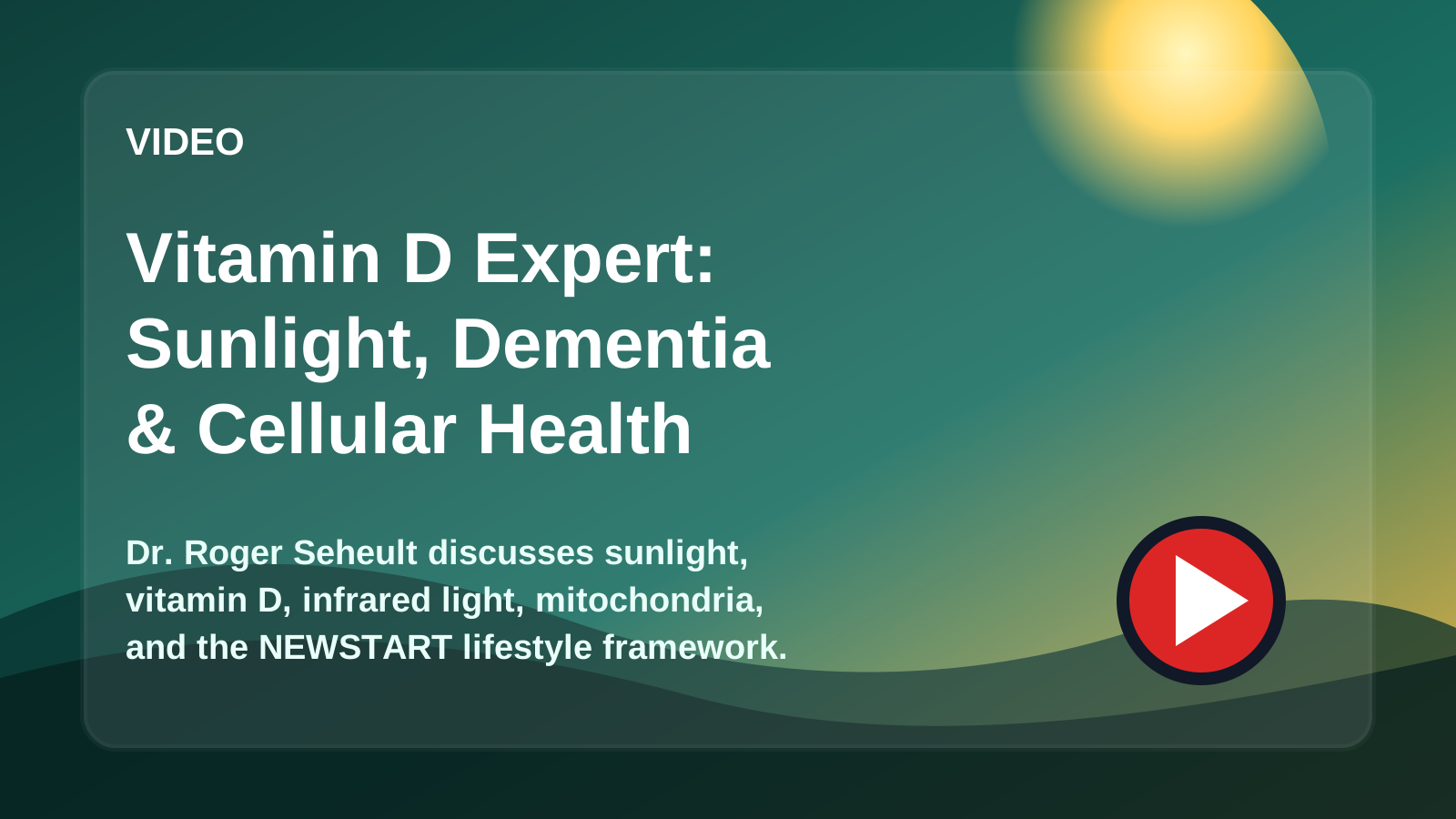
A growing number of physicians and researchers are beginning to challenge one of modern society’s most overlooked health assumptions: that sunlight is primarily something to avoid. According to critical care physician Dr. Roger Seheult, sunlight may play a far deeper role in human health than simply helping the body produce vitamin D. Emerging research suggests that exposure to natural light — especially infrared wavelengths — could influence everything from immune function and inflammation to mitochondrial health, recovery from illness, mood, metabolism, and longevity.
Dr. Seheult’s perspective comes not from theory alone, but from years spent treating critically ill patients in intensive care units. During the COVID-19 pandemic and countless medical emergencies, he noticed patterns that pushed him to rethink many assumptions about chronic disease and recovery. He argues that health is not built on a single miracle drug or isolated treatment, but on strengthening multiple interconnected systems in the body simultaneously.
The “Eight Pillars” of Health
Dr. Seheult describes health as a chain made up of many links, with each link representing a major organ system such as the heart, lungs, liver, kidneys, or brain. Over time, these links gradually weaken. Disease occurs when one link becomes vulnerable enough to break first. Modern medicine often focuses on repairing that single weak link with medications or emergency interventions, but many treatments come with tradeoffs and side effects.
To prevent those links from deteriorating in the first place, he outlines what he calls the “Eight Pillars of Health”:
Together, the first letters form the acronym “NEWSTART,” a framework used in preventive health programs. The central idea is that these lifestyle factors strengthen all systems of the body at the same time instead of sacrificing one system to save another.
Exercise, for example, not only improves strength and endurance but also reduces depression, stroke risk, and cardiovascular disease. Rest and sleep are equally important, helping the body repair itself physically and mentally. Exposure to fresh outdoor air and green environments appears to improve immune function, reduce inflammation, and lower stress. Avoiding toxins such as tobacco, alcohol abuse, and drugs protects the body from preventable damage.
Yet among all these pillars, sunlight became the area that most captured Dr. Seheult’s attention.
A Remarkable Recovery
One case profoundly changed the way he viewed sunlight and healing. A 15-year-old boy undergoing chemotherapy for leukemia developed a severe flesh-eating fungal infection in his lungs. Doctors removed his left lung in an attempt to save him, but the infection spread to his remaining lung. Eventually the medical team concluded there was nothing more they could do. The boy was expected to die within days.
When asked what he wanted during his final days, the boy gave a simple answer: he wanted to go outside.
The hospital staff arranged to wheel him outdoors while still connected to breathing support equipment. Along with exposure to sunlight, they also used a light device called a “Firefly,” which emitted therapeutic wavelengths of light several times per day.
What happened next stunned everyone involved.
Within days, his white blood cell count began improving, his oxygen needs dropped, and scans showed dramatic reduction in the infection inside his remaining lung. Eventually he was discharged home and survived despite previously being considered beyond recovery.
While this single case does not prove causation, it deeply influenced Dr. Seheult’s thinking about the potential importance of sunlight and therapeutic light exposure in healing.
Why Sunlight May Matter More Than Vitamin D
Most people associate sunlight primarily with vitamin D production. Dr. Seheult argues that this is only one small piece of the picture. Sunlight contains a broad spectrum of wavelengths, including ultraviolet light, visible light, red light, and infrared light. Different wavelengths interact with the body in different ways.
Infrared light, in particular, appears capable of penetrating deeply into human tissues. Research discussed in the interview suggests that these wavelengths may directly influence mitochondria — the tiny energy-producing structures inside cells often referred to as the “powerhouses” of the cell.
As humans age, mitochondrial efficiency declines significantly. This loss of cellular energy production has been linked to many chronic diseases, including diabetes, dementia, cardiovascular disease, obesity, and metabolic dysfunction. According to the theory presented, infrared light may stimulate mitochondria to function more efficiently while helping reduce oxidative stress, a damaging process associated with aging and disease.
One surprising aspect of this theory involves melatonin. Most people think of melatonin only as a sleep hormone produced in the brain. However, researchers now believe mitochondria themselves may produce melatonin locally inside cells, where it acts as a powerful antioxidant and protective mechanism. Infrared light may help stimulate this protective process.
COVID-19 and Mitochondrial Stress
During the COVID-19 pandemic, Dr. Seheult noticed that the patients most likely to become critically ill were not necessarily healthy young people with respiratory symptoms, but individuals already suffering from chronic illnesses such as obesity, diabetes, kidney disease, dementia, and cardiovascular disease.
Many of these conditions share one common feature: mitochondrial dysfunction.
He became interested in studies showing that people with higher vitamin D levels tended to fare better during COVID-19 infections. However, giving hospitalized patients vitamin D supplements often failed to produce dramatic results. This led him to suspect that vitamin D itself might simply be a marker for something else — specifically, time spent outdoors in sunlight.
If sunlight exposure improves mitochondrial resilience through infrared wavelengths, then people regularly exposed to sunlight might be metabolically healthier and better able to tolerate severe infections.
Research Into Red and Infrared Light
The interview also discussed growing research into red light and infrared therapy devices. Studies referenced in the discussion suggest that specific wavelengths of red and near-infrared light may improve mitochondrial efficiency, reduce inflammation, stimulate collagen production, improve skin quality, and possibly enhance glucose metabolism.
In one experiment, researchers exposed participants to red light and observed reduced blood sugar spikes after glucose consumption, alongside increased markers of mitochondrial activity. Another study involving COVID-19 patients used jackets embedded with infrared-emitting LEDs. Patients who received the active treatment reportedly showed improved oxygenation, reduced inflammation, and shorter hospital stays compared to controls.
Dr. Seheult stresses that more large-scale clinical trials are needed. However, he believes the low risk of reasonable sunlight exposure and the potential benefits justify spending more time outdoors.
Nature, Trees, and Green Spaces
The discussion also explored research suggesting that green environments themselves may improve health. People living near trees and green spaces consistently show lower rates of depression, diabetes, hypertension, inflammation, and mortality.
One study in Louisville, Kentucky planted thousands of mature trees in urban neighborhoods. Two years later, researchers found measurable reductions in inflammatory markers among residents, despite no major changes in socioeconomic conditions or exercise programs.
Dr. Seheult notes that trees strongly reflect infrared light, potentially increasing beneficial light exposure in natural environments.
Modern Life Indoors
Perhaps the most striking statistic mentioned was that modern Americans and Britons spend over 90% of their lives indoors. Dr. Seheult argues that human beings evolved outdoors in natural environments filled with sunlight, fresh air, changing temperatures, and physical movement. Modern life has largely disconnected people from those conditions.
He compares today’s lack of sunlight to the scurvy epidemics suffered by sailors centuries ago. Just as sailors unknowingly lacked vitamin C, modern humans may unknowingly be deprived of essential aspects of natural light exposure.
A Practical Perspective
Despite his enthusiasm for sunlight and infrared research, Dr. Seheult does not present sunlight as a cure-all or a replacement for medical care. Instead, he sees it as one foundational component of a broader lifestyle approach to health.
His practical advice is simple:
Spend more time outdoors.
Get regular sunlight exposure when possible.
Exercise outside when practical.
Take breaks from screens and indoor environments.
Maintain good sleep habits.
Reduce exposure to toxins.
Surround yourself with natural environments and greenery.
While many questions remain unanswered, the growing body of research suggests that sunlight may be far more biologically important than previously believed — influencing not only mood and vitamin D levels, but also the very energy systems inside human cells.